Ford Puma SUV 2025 review | The best small SUV you can buy
Ford Puma SUV cars for sale
5.0
Expert review
Pros
Very practical, especially the big boot
Generous standard equipment
Petrol and electric options
Cons
Rear headroom could be more generous
Short new-car warranty
Other electric SUVs have longer ranges
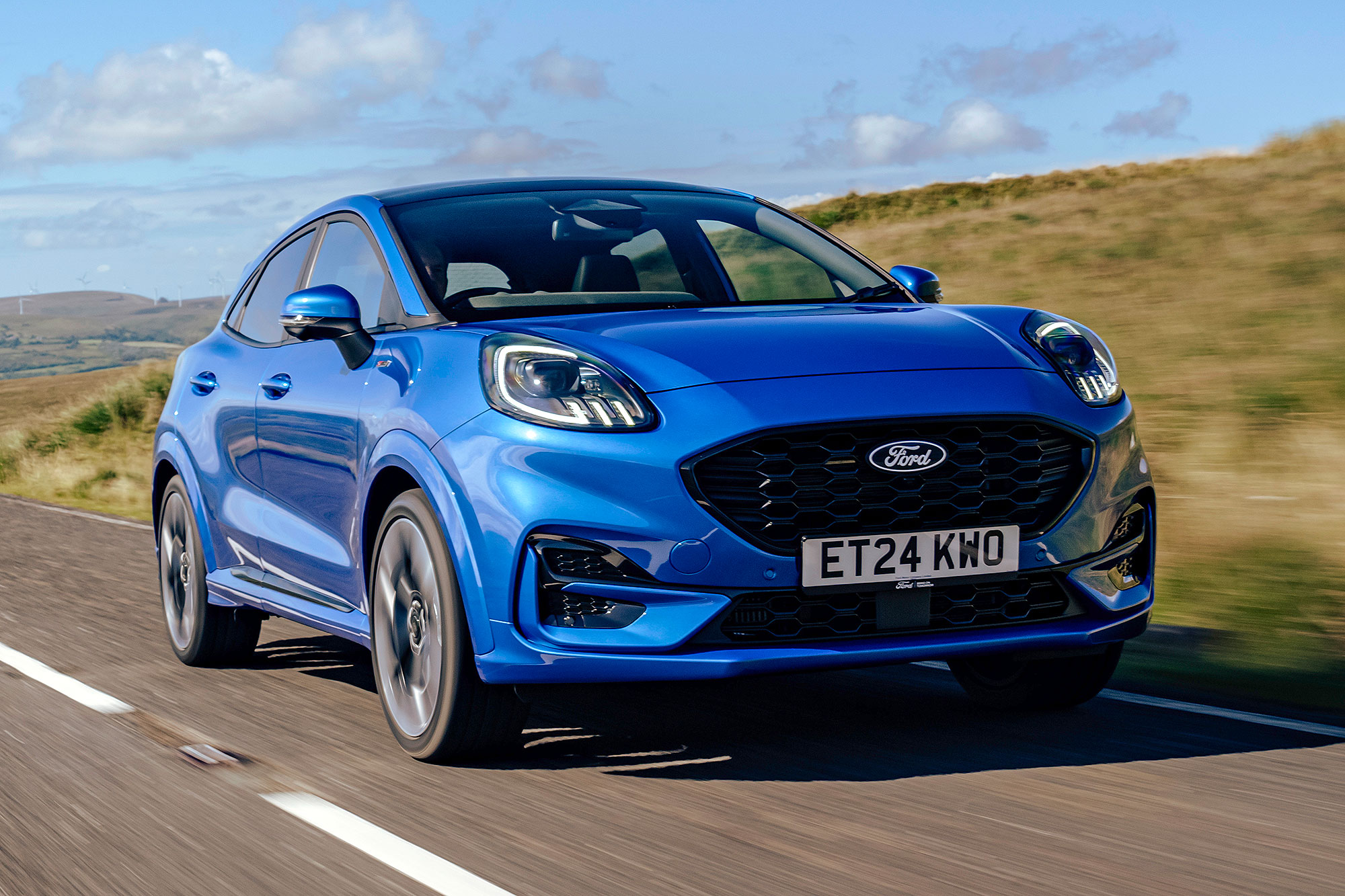
The CarGurus verdict
The Ford Puma arrived slightly later than some rivals in the compact crossover class. However, it quickly made its mark thanks to a distinctive character, value for money and sporty driving manners. In a segment full of worthy but rather unimaginative small SUVs, the Puma stands out as a real highlight, managing to be both fun to drive and highly practical.
Add in the generous equipment levels, smart looks (tweaked in 2025), lively 1.0-litre EcoBoost engine, and the arrival of the all-electric Gen-E, and the Puma emerges as one of the strongest all-rounders in a competitive class. Small wonder it’s the UK’s best-selling car.
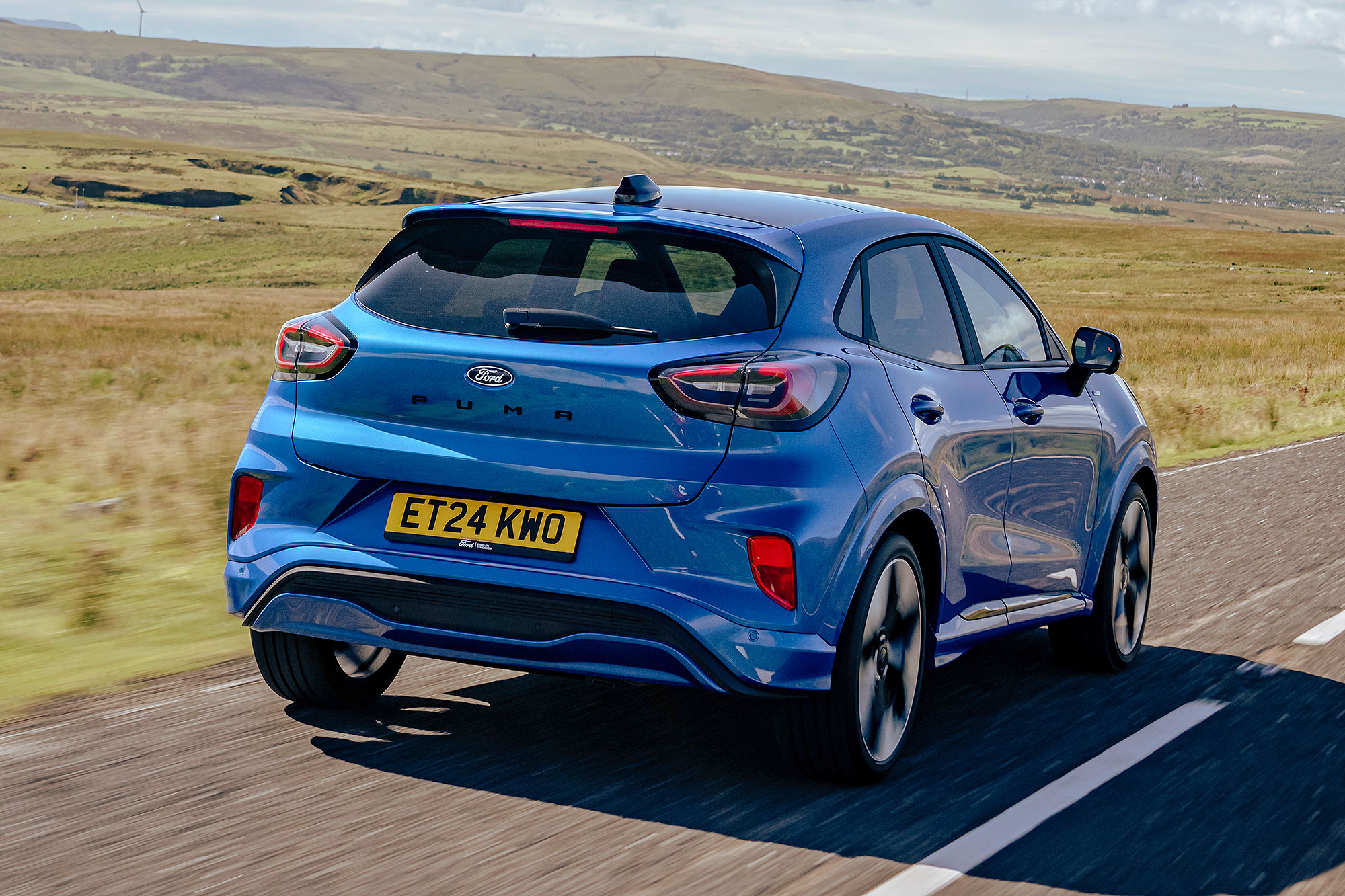
What is the Ford Puma?
When the Ford Puma SUV (or, perhaps more accurately, Puma crossover) was announced in 2019, the internet was awash with naysayers bemoaning Ford for resurrecting the Puma badge for a small SUV. In hindsight, those worries now look rather misplaced. The modern Ford Puma proved to be exactly the right car at the right time, going on to become one of the best-selling small crossovers in the UK thanks to its blend of style, practicality and driving fun. Besides, the internet has since moved on to criticising the resurrection of the Ford Capri as an electric SUV…
At around 4.2 metres long, the Ford Puma sits firmly in the heart of the compact SUV class, competing with rivals such as the Hyundai Kona, Nissan Juke, Renault Captur, Seat Arona and Skoda Kamiq. Despite its small size, it’s one of the most practical of the bunch, helped by the cleverly designed boot. It’s also widely regarded as one of the best small SUVs to drive, especially if you choose the sporty Ford Puma ST.
The Puma range now includes a fully electric version alongside the popular petrol models. The Ford Puma Gen-E has a 43kWh battery and a range of 233 miles, putting it in direct competition with EVs such as the Jeep Avenger, Kia EV3 and Skoda Elroq. It’s sold alongside the 1.0-litre EcoBoost mild-hybrid petrol Ford Puma, which was the UK’s best-selling car in 2025.

How practical is it?
Ford has clearly focused on practicality with the Puma, and despite its supermini roots (it's based on the now-discontinued Fiesta) this compact crossover is surprisingly spacious. In the back, there’s just enough room for two six-foot adults to squeeze in, although they won’t thank you for keeping them there for any length of time. But for kids it’s great. Access is also fairly easy thanks to wide-opening rear doors, while the car’s slightly raised ride height makes it easier to load and unload child seats. You will find a bit more headroom in the Skoda Kamiq than you do in the swoopy Ford, though.
Up front, there is a wide range of seat- and steering wheel adjustment for the driver, so there should be no problem getting comfortable. You can even get the seat nice and low for a sporty feel behind the wheel, or jack it right up to make the most of the Puma’s narrow height advantage over more conventional small cars. There is also a useful amount of storage in the Puma, with deep door bins, a large glovebox and – as of the facelift in 2025, which brought plusher materials, a bigger touchscreen and the addition of the electric Puma Gen-E – a raised, double-level storage area between the front seats.
More impressive is the Puma’s boot; at 456 litres, it rivals some models from the class above. There’s also a false floor that can be used to keep valuables out of sight, or lowered to create more space for larger items. Fold the 60:40 split-fold rear bench and there’s up to 1,216 litres of carrying capacity.
However, the star of the show is the deep ‘MegaBox’ compartment that is hidden beneath the boot floor. This adds 80 litres of additional capacity in a deep, waterproof-lined space and comes complete with a drainage plug, making it ideal for transporting muddy boots or sea water-soaked wet suits. Go for the Gen-E and that box (called the ‘GigaBox’ in honour of its bigger stature) is even larger, at 145 litres, making for a total boot capacity in the electric Puma of 523 litres. That’s way more than any similarly-sized SUV.

What's it like to drive?
The Ford Puma's crisp-handling, front-wheel-drive chassis is powered by the familiar 1.0-litre EcoBoost engine, which is a three-cylinder, turbocharged unit, complete with mild-hybrid (MHEV) technology and the choice of a six-speed manual or seven-speed automatic transmissions (the 153bhp version is automatic only). That MHEV system is basically an advanced stop-start setup, which uses an electric motor to assist the EcoBoost petrol engine, improving fuel economy and reducing emissions. It works really well, whether in its 168bhp (the sporty ST only), 153bhp or 123bhp guises. Then there’s the electric Puma Gen-E, which serves up 165bhp and will reach 62mph in 8.0 seconds.
You don’t need the range-topping ST to have fun with the Puma, though, because it’s enjoyable regardless of which model you pick. If you value ride comfort over outright agility, the standard car with its smaller 17-inch alloy wheels and softer suspension will be more appealing, but every Puma has neatly tied-down body control, lively handling and instils plenty of confidence. Even keen drivers will find something to enjoy here, this small Ford having enough dynamic appeal to make you genuinely consider taking the long way home.
We do have one gripe regarding the Gen-E, though, and that’s with the one-pedal mode. This is the heaviest setting for an otherwise very moderate regenerative braking setup on the Puma, and it means that you can drive around town mostly without needing to use the brake pedal. Just lift off the throttle and the car will slow to a complete stop, gathering energy to boost its range and efficiency. It’s a feature in lots of electric cars, but in the Puma, it’s a bit too grabby and you have to work quite hard to moderate the accelerator pedal precisely if you want smooth stopping. Still, in the standard regen' setting the Puma’s a doddle to drive smoothly, so it’s not likely to be a deal-breaker.

Technology, equipment & infotainment
Ford offers four trim levels on the regular Puma: Titanium, ST-Line, ST-Line X and Sound Edition. Such is the competitiveness in this class, you really don’t need to pick anything other than the entry-level Titanium model. The standard equipment list includes 17-inch alloy wheels, a leather steering wheel and gear selector, cruise control, lane-keeping assist and lane-departure warning, automatic headlights, a reversing camera, rain-sensing wipers and more. You’ll need to spend a few hundred pounds on the Winter pack to get heated seats, while keyless entry is a more expensive option. Keep in mind that the ST-Line trims, and faster ST model, all get sports suspension. So, if comfort is more of a priority than style and sporty handling, the Titanium is definitely the Puma for you.
As its name suggests, the Sound Edition comes with an upgraded audio setup, in this case a B&O system with an increased 650W output and Beosonic sound tuning. Other features include 18-inch alloy wheels with a black finish, matrix LED headlights, a contrasting black-painted roof, partial synthetic leather seats and the Winter Pack.
The electric Puma Gen-E is just as well equipped in the entry-level Gen-E Select, while top-spec Gen-E Premium adds bigger 18-inch alloy wheels, a B&O sound system and full Matrix LED headlights. You’ll still need to add those heated seats, though.
As of the 2025 facelift, all versions of the Puma are fitted with a new 12.0-inch touchscreen that runs Ford’s SYNC 4 infotainment system. This comes with navigation, Bluetooth, over-the-air software updates and – most importantly – wireless Apple CarPlay and Android Auto connectivity. We’d rather the air-con controls were separate from the screen, and some of the icons are a bit small and fiddly, but generally the system responds quickly and is easy enough to use. A 12.8-inch digital instrument cluster is also standard across the Puma range.

Ford Puma running costs
It might be bigger in every dimension, but the Puma is still basically a Fiesta with a fashionable crossover body. That should translate to supermini-like running costs, which is a good thing.
The engine choices don’t deny you fun for their parsimony, with fuel economy around the 48-52mpg mark in the WLTP combined testing schedule. CO2 emissions are between 121g/km and 135g/km on the same official test cycle. That means that the Ford is competitive on Benefit-in-Kind (BiK) company car tax and efficiency next to its rivals, but a self-charging or plug-in hybrid alternative such as the Toyota C-HR will be usefully cheaper. Fully electric vehicles are by far the cheapest if you’re paying company car tax, making the Ford Puma Gen-E a great option.
List prices are very competitive regardless of which Puma you’re considering, but we’d like to see the monthly PCP costs for the electric Gen-E drop a little lower.
Maintenance can be covered optionally on a two- or three-year Ford Protect Service Plan, which covers regular service costs with an easy monthly payment, and also extends the Ford Assistance offering. Or, if you go for the Puma Gen-E, Ford has introduced a ‘Power Promise’ on all its electric cars, which includes five years of free servicing, 10,000 miles of charging costs and a free home charger. Given the savings that the Power Promise brings, together with competitive pricing from under £30,000 and class-best real-world efficiency, the Puma Gen-E promises to be one of the most affordable electric family cars to run.
All versions of the Ford Puma, including the Puma Gen-E, fall comfortably below the £40,000 mark on price, so you won’t be hit with the additional premium rate of VED (road tax).

Ford Puma reliability
While the Ford Puma has been subject to a couple of recalls, it's worth remembering that these are common on many cars. The first relates to the hybrid battery connections, which could lead to a fire. Likewise, there has been a recall relating to the airbags, which may result in their protection function being impaired in the event of an accident. All of this should have been remedied already, but it’s always worth checking the registration of any potential purchase with Ford.
Ford doesn’t always cover itself in glory in the reliability stakes. In the 2025 What Car? Reliability Survey, it finished a disappointing 24th out of 30 brands, with around a quarter of Ford models experiencing an issue. The Puma itself fared little better, finishing 32nd out of 38 cars on the list of the most reliable small SUVs.
There’s a three-year, 60,000-mile warranty on the Puma, which looks stingy these days, with Kia, MG, Hyundai and Toyota offering much longer cover. At least the Puma Gen-E’s high-voltage battery comes with an eight-year, 100,000-mile warranty – much the same as the battery cover on most EVs.
- The MHEV mild hybrid system in the Puma is very unobtrusive and you’ll forget that there’s any electric assistance involved. You can’t plug it in, and the car doesn’t ever run on electric power alone; the mild hybrid system just works with the petrol engine to boost performance and efficiency.
- The electric Ford Puma Gen-E can charge at up to 100kW, and because it has a modest 43kWh battery capacity, it will charge from 10-80% in as little as 23 minutes. It’s very efficient, too. We saw a summertime real-world range of 190 miles even on fast motorway and country roads; not bad for an electric SUV with a claimed range of 233 miles. Expect that real-world range to drop to more like 150 miles in winter, however.
- The Puma ST really is like a hot hatchback on (small) stilts. To find out just how good it is, we pitched it against the more expensive Hyundai Kona N and Audi SQ2. Watch our video to see which car came out on top.
- If you just want the one that does everything you need, go for a Puma Titanium with the lower-powered version of the 1.0-litre EcoBoost MHEV petrol engine and a manual gearbox. It really is all you need, because it comes with a generous level of standard equipment and delivers the best blend of performance, comfort and value.
- If most of your driving is around town, the electric Puma Gen-E makes a lot of sense thanks to its smooth drivetrain and very low running costs. With a realistic range of around 200 miles from a full charge, though, it’s capable of more than just short urban trips.
- For the most fun behind the wheel, choose any Puma and it’ll be more enjoyable to drive than most compact SUV rivals. Pick of the bunch, however, is the range-topping Puma ST, even if the old 1.5-litre EcoBoost petrol engine has been replaced by a 168bhp version of the 1.0-litre EcoBoost unit. It’s now automatic only, which is a shame, but the Puma ST feels more like a hot hatch than a compact SUV.
- If you want an upmarket Puma, the now-discontinued ST Line Vignale is worth seeking out on the used market. It adds a layer of luxury with chrome detailing, unique Vignale styling touches, premium leather upholstery, heated seats and a heated steering wheel, plus lumbar-massaging front seats for easing the pain of a long journey.

